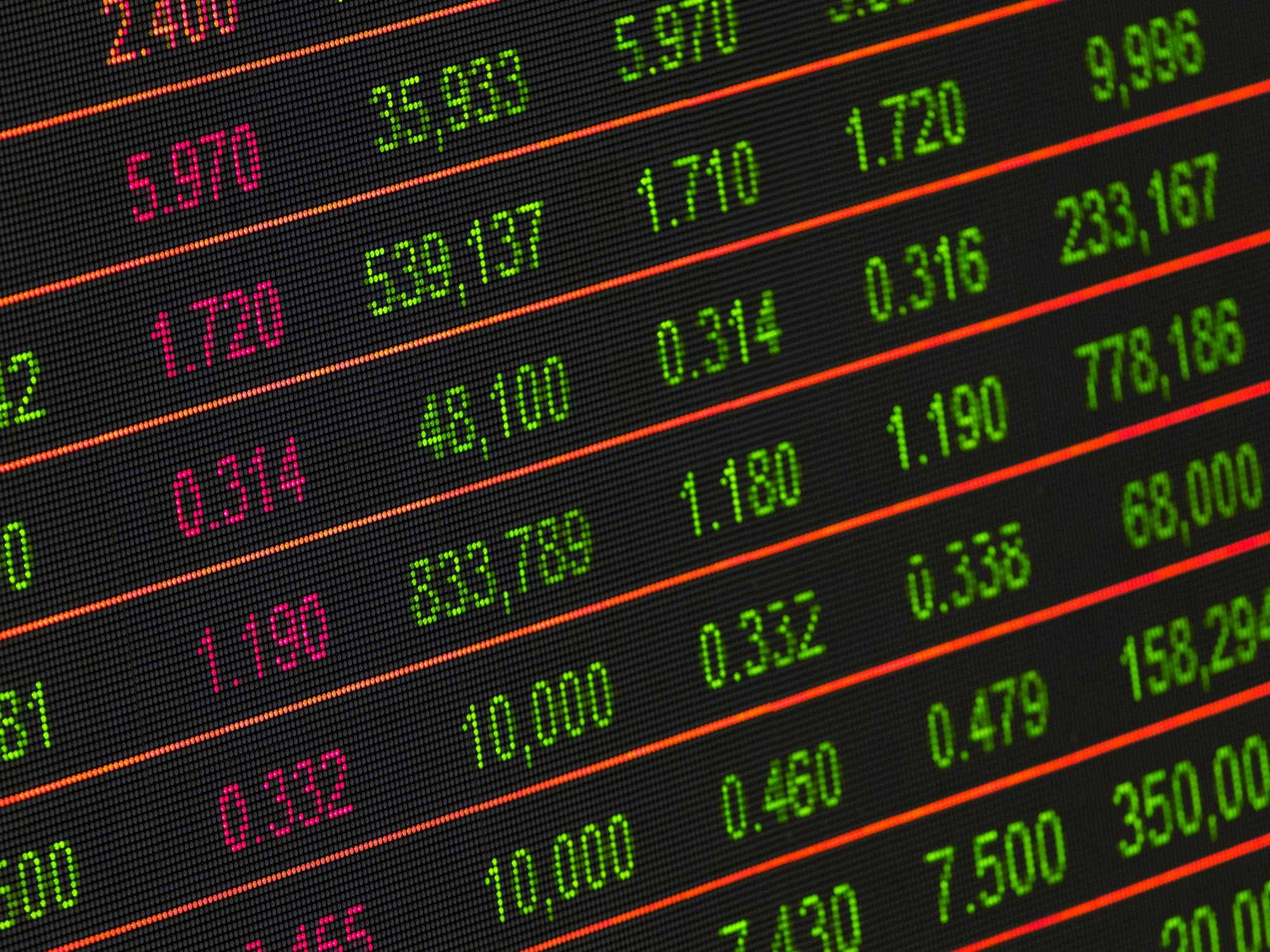
I remember clearly. I had been this internet guy for a while, thinking people really paid attention to me on Twitter. And I’d enjoyed fun moments and also moments of praise and fame. I’d been invited to coordinate a school, played many gigs, written papers graded 10, started a blog. And then one day, I think around 2017 or 2018, I was going through a break up on the internet and my grandma had Alzheimer’s and slowly lost mobility. When it was time for her to sleep, I went to the living room, where I slept. And I watched TV, because I couldn’t sleep and also because, at some point, I didn’t have a phone. The service provider granted us with 4 international channels: the BBC, CNN, Bloomberg and Fox (the latter being cut shortly after). And I loved to watch those, because it meant getting real time coverage about the country where my loved ones were. Except that, with Bloomberg, it was all about business.
I started to get dizzy with all that coverage. Sometimes, I felt confused. I was already paranoid, so I thought sometimes there was a reference in the air, and you do get a weird feeling when someone’s staring at you directly on camera. But not narrating things that you just did. When they talked about what direction the markets were going, I was honestly pissed off. It was one company after another, and me learning just how much they made, and soon after I’d write down Facebook’s annual profits as 83 billion dollars, thinking how absurd that was. To me, that number offered a new dimension of the world. But in between sentences, I’d already lost track of what the hell they were even talking about.
The profuse jargon, the analysis about political speeches’ influence on the market, the metrics and systems, the music, the atmosphere, the sheer speed of information flow, and the number of appearances of top executives on the network made me think I was nobody. And I didn’t even understand English. Because, if that’s what you need to do business, then I don’t have a chance.
And I was just starting to try to take this project a step further. I thought about pamphlets, and I got my first students out of social media posts. One day, a guy reached out to me and it just happened: we quickly discussed his goals and needs and then I committed to 3 months, I believe, with him calling me twice a week. I learned a lot about online teaching. But very little about business. I slowly started to think about what I needed to do to scale up my production, offer more products, talk about different subjects, and this or that coach was supposed to guide me to being a successful entrepreneur. A “founder”, a “CEO”. Then I listened to actual CEOs and was like: “yeah, I don’t know what this was all about”. And they were just public image statements and numbers on profit margins. Earnings. Investments. Acquisitions.
I wouldn’t make any kind of acquisition. I depended, of course, on many technological tools to be able to even think about promoting my work, and so it happens that things got even more complicated: with the COVID pandemic, everything turned into a fight for your life — at the same time when I was, again, getting through a breakup, taking care of my grandma and trying to set up a business. I didn’t have time to think about whatever Microsoft was doing, or how much the stock went up or down. I barely understood, and it took me many years to, terms like “2 points of one percent”. To me, one percent was the number one and the idea of percentage already complicated my brain: to calculate that, you needed to do the rule of three, and I always messed it up. Writing by hand. With the calculator, I didn’t know how to use the percentage button, and something was always off. Much later, I started to calculate payments and things like that with percentages, using decimals. It was always zero point something. But until recently, it didn’t dawn on me that if I wanted to calculate how much is gonna be taken of by a 33% commission, I would have to input times 0.67 (because that’s 100 minus 33). I know right? Genius…
So imagine being surrounded, or at least watching on your screen, people who know everything about numbers. And then, witnessing historical moments, not covered by recordings and a story of a journalist, but the actual live footage, then some comments. Presidents meeting. The British Parliament deciding what to do next. The Fed (I’d learn a little about that) deciding whether to cut. And there was so much speculation that I thought it was unreal.
But then I reset. Suspended from Twitter, I found a place on Mastodon, then Tumblr, then Bluesky. And those were better experiences, overall. I didn’t have verified people following me, but soon enough, relevant people did. And I started to be more in tune with the news like I used to be, before the Twitter suspension and before changing my habit to follow less news vehicles, because nobody wants to follow them all unless they’re an actual journalist. Where was the speculation on whether or not the president should have used those words? On whether or not that crazy policy made any sense, or was even legal? Where was the sympathy towards certain groups of people? Where was the social relevance in their reporting?
Nowhere to be seen. That’s what I learned about Bloomberg. If you wanna have a business, great: try to catch up with the big players, and if you’re well informed, you’ll know exactly what they’re talking about. What’s more: if you’ve read the news before going to them, you’ll know just how important things are. And you may want some comment on the stocks, to see indicators of performance that you can interpret independently. But if you’re looking for the truth? For social justice advocates? For the nobleness of journalism, that cares about people’s lives and their stories being told? You definitely won’t find it there. Unless you wanna be a millionaire CEO. Then, maybe go to therapy.

 Participatory Fluency | Fluência Participativa